




Tzitzis Size Guide — Fit, Fabric, Minhagim, and Halachic Specifications
Tzitzis are worn daily from upsherin through a lifetime. Unlike a tallis — a lifetime purchase — tzitzis get replaced every year or two as they wear. That makes fit, material, and minhag the critical factors: you’re going to buy them many times, so it’s worth understanding what you’re choosing.
This guide covers children’s and adult sizes, materials, minhagim (Ashkenazi, Arizal, Chabad, Sephardic), 1-hole vs 2-hole, string specifications across the mehadrin spectrum, techeiles, and kosher certification.
How Tzitzis Sizes Work
Tzitzis (the garment, often called a tzitzis katan or arba kanfos) is sized by the age or chest measurement of the wearer. Children’s tzitzis are numbered by size (2, 4, 6, 8, 10, 12, 14) roughly corresponding to age in years. Adult tzitzis are sized Small, Medium, Large, XL, XXL based on chest measurement.
A proper tzitzis should be long enough to cover most of the torso but not so long that it extends below the waistband awkwardly. Most men wear the tzitzis tucked in; some communities wear them out with the strings visible.
Children’s Tzitzis Size Chart
| Size | Age (approx.) | Typical Fit |
|---|---|---|
| 2 | 2–3 years | Upsherin / very young |
| 4 | 3–4 years | Preschool |
| 6 | 5–6 years | Young child |
| 8 | 7–8 years | Elementary |
| 10 | 9–10 years | Elementary / cheder |
| 12 | 11–12 years | Pre-bar mitzvah |
| 14 | 13–14 years | Bar mitzvah / early teen |
Size by the boy’s age as a starting point, then adjust by frame. A taller or broader boy sizes up one; a smaller boy sizes down. Boys grow fast — many families buy slightly large and replace within the year.
Adult Tzitzis Size Chart
| Size | Chest | Typical Wearer |
|---|---|---|
| Small | 34–36″ | Smaller-frame teen or adult |
| Medium | 38–40″ | Standard adult |
| Large | 42–44″ | Standard–larger adult |
| XL | 46–48″ | Larger adult |
| XXL | 50–52″ | Extra-large adult |
If you’re between sizes, size up. Tzitzis shrink slightly on the first wash, especially cotton.
Tzitzis Materials
Wool — the halachically preferred material. Tzitzis on a wool garment are a Torah-level mitzvah, while tzitzis on cotton, polyester, or other non-wool materials are a rabbinic-level mitzvah according to many opinions. Most yeshivish and chassidish men wear wool tzitzis daily. Wool tzitzis range from lightweight soft wool to heavier traditional wool. All wool tzitzis must be shatnez-tested.
Cotton — soft, breathable, machine-washable. The most common material for children’s tzitzis and the most practical for daily wear in hot weather. Standard for Modern Orthodox, Sephardi, and yeshivish children. Many yeshivish adults also wear cotton.
Mesh — lightweight, breathable, quick-drying. Ideal for summer, hot climates, camp, and sports. Often cotton-mesh blend. Popular for boys and for adults in Florida, Israel, and similar climates.
Hybrid / wool-cotton blend — combines wool (for the Torah-level mitzvah) with cotton panels for comfort. Check the specific halachic details before purchasing — some blends qualify as wool, some don’t, depending on construction.
Neckline Styles
V-neck — the standard for most adults and older boys. Sits comfortably under a shirt.
Round / crew neck — common on children’s tzitzis. Easier to put on for young boys.
Pullover vs button — most tzitzis are pullover. Some children’s styles have button or snap closures on the side.
Minhagim — Ashkenazi, Arizal, Chabad, Sephardi
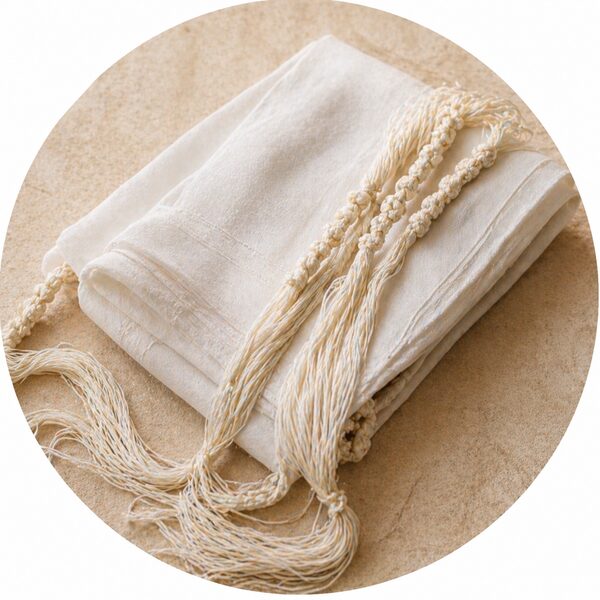
The specifics of how tzitzis are tied — the number of chuliyot (knot groupings), the pattern of knots between them, and the order of strings — vary by community minhag. When you buy tzitzis, the tying pattern should match your minhag.
Ashkenazi (Chazon Ish / standard minhag) — the most common pattern in yeshivish and litvish communities. Uses the pattern 7–8–11–13 between the five double knots (the numbers refer to the chuliyot between each knot). Most tzitzis sold in Lakewood and similar communities follow this minhag by default.
Arizal (Sephardi / many Sephardim) — the tying follows Kabbalistic specifications associated with the Arizal. The chuliyot and knots follow a specific mystical pattern. Standard for most Sephardim and some chassidim.
Chabad — follows the Alter Rebbe’s specific minhag, which aligns with the Arizal in most respects. Chabad tzitzis are typically sold with specific Chabad specifications.
Yemenite — a distinct tying tradition with its own chuliyot count and knot pattern.
When ordering, specify your minhag — Ashkenazi, Arizal, Chabad, or Yemenite — so the tzitzis are tied correctly.
Hole Configuration — 1-Hole vs 2-Hole
This is the same consideration as on a tallis: how many holes in each corner the strings pass through.
1-Hole (Chad Chor) — single hole per corner. Common among:
- Many chassidic communities (including Chabad)
- Sephardim following the Arizal
- Some Yemenite traditions
2-Hole (Trei Chori) — two holes per corner. Cited by the Rama (Orach Chaim 11:9) as common Ashkenazi practice. The Chazon Ish was machmir for 2-hole. Standard for most yeshivish and litvish Ashkenazim.
Match the configuration to your minhag. Most tzitzis listings specify 1-hole or 2-hole — filter accordingly.
Tzitzis String Specifications
The strings themselves are where the halachic variation — and the price — is concentrated.
Hand-tied vs machine-tied:
Hand-tied by a sofer or trained tier with proper intent (l’shem mitzvah). The standard for anyone pursuing hiddur. Typical for daily-wear tzitzis in yeshivish and chassidish circles.
Machine-tied — kosher but not hiddur. Less expensive. Common on lower-priced children’s tzitzis.
String level (mehadrin spectrum):
Standard — machine-spun strings, basic kosher. Entry level.
Niputz Lishma — wool carded specifically for the mitzvah. Entry-level mehadrin.
Taviah Lishma — wool spun specifically for the mitzvah. The standard mehadrin level for most frum buyers in Lakewood and similar communities.
Avodas Yad (hand-spun) — wool hand-spun specifically for the mitzvah. Highest level of hiddur. Significantly more expensive. Standard for chosson tzitzis and for those pursuing maximum hiddur in yeshivish and chassidish circles.
String thickness:
Thick (Gassos) — extra-thick strings, more visibly prominent. Preferred by many poskim as a hiddur. Common yeshivish and chassidish preference for daily wear.
Regular — standard thickness.
Thin (Dakkos) — lighter, slimmer strings. Some find more comfortable under clothing.
Techeiles
The Torah mitzvah of tzitzis originally included one string of techeiles — a specific blue dye. The source (the chilazon) was lost centuries ago, and most Ashkenazim and many Sephardim have worn all-white tzitzis ever since.
Two primary modern techeiles sources exist:
Ptil Tekhelet (Murex trunculus) — from the Murex trunculus sea snail. Accepted by many Rabbanim. Increasingly common in some yeshivish, Religious Zionist, and chassidic communities.
Radzyn — squid-ink based, developed by the Radzyner Rebbe. Worn primarily in Radzyn and related chassidic communities.
Number of techeiles strings per corner: The Rishonim differ — Rambam (one string, half-dyed), Raavad (two strings), Tosafos/Gra (varies). Modern techeiles tzitzis specify which shita they follow. If you wear techeiles, your Rav should advise which shita applies before you buy.
If you don’t wear techeiles, that’s normal — the majority of frum Jews today wear all-white tzitzis. Personal halachic decision; ask your Rav.
Kosher Certification and Shatnez
Standard kosher — basic certification. Adequate for most.
Mehadrin certification — higher-level certification from Eida HaChareidis, Vaad Mishmeres STaM, or a specific beis din.
Shatnez-tested — required for any wool tzitzis. Verifies the garment contains no shatnez (wool-linen mix). All our wool tzitzis are shatnez-tested before shipping.
Care
Cotton tzitzis — machine-washable on cold, gentle cycle. Tie the strings into a bag or pillowcase to prevent tangling. Air-dry or low tumble.
Wool tzitzis — dry clean, or hand-wash cold with wool-safe detergent. Dry flat.
Mesh tzitzis — machine-washable; quick-drying.
Strings — the strings themselves tangle easily. Detach if washing frequently, or use a mesh laundry bag. Replace strings if they shorten, fray, or if any single string is cut at the base.
Frequently Asked Questions
What size tzitzis for my son? Match the age/size chart above. Most boys size up slightly so the tzitzis last longer. When in doubt, call us — (732) 444-3111.
Cotton or wool for a boy? Most yeshivish and chassidish boys in Lakewood and similar communities start with cotton for comfort and practicality, and transition to wool later. Some families start with wool from the beginning to fulfill the Torah-level mitzvah. Ask your Rov.
Hand-tied or machine-tied for a child? Hand-tied is hiddur but not required. Many families choose machine-tied for young boys who go through multiple pairs a year, then switch to hand-tied as they get older.
What’s the difference between Ashkenazi and Arizal tying? Different patterns of chuliyot and knots between the five double knots. Both are fully kosher; the difference is which tradition. Follow your family minhag.
1-hole or 2-hole? Follow your minhag. Ashkenazi yeshivish and litvish typically 2-hole (Chazon Ish). Chassidim, Chabad, and Sephardim typically 1-hole (Arizal).
Do I need Avodas Yad tzitzis? Not required, but a hiddur. Taviah Lishma is the standard mehadrin level. Avodas Yad is the top tier — chosen by those pursuing maximum hiddur and standard for chosson tzitzis.
Should I wear techeiles? Personal halachic decision — ask your Rav. Most frum Jews today wear all-white tzitzis.
My son’s tzitzis string broke — does he need new tzitzis? A partial tear is usually fine; a complete break or a cut at the base of a string invalidates that corner and the tzitzis should be retied or replaced. Ask your Rov with the specific case.
How often should tzitzis be replaced? Children’s tzitzis typically last 6–12 months with regular wear. Adult tzitzis 1–2 years. Strings can be replaced separately as they wear.
Shop Tzitzis
Shop All Tzitzis →
Wool Tzitzis →
Mesh Tzitzis →
Children’s Tzitzis →
Adult Tzitzis →
Free shipping on orders over $75. From the family that started Eichler’s Brooklyn.