





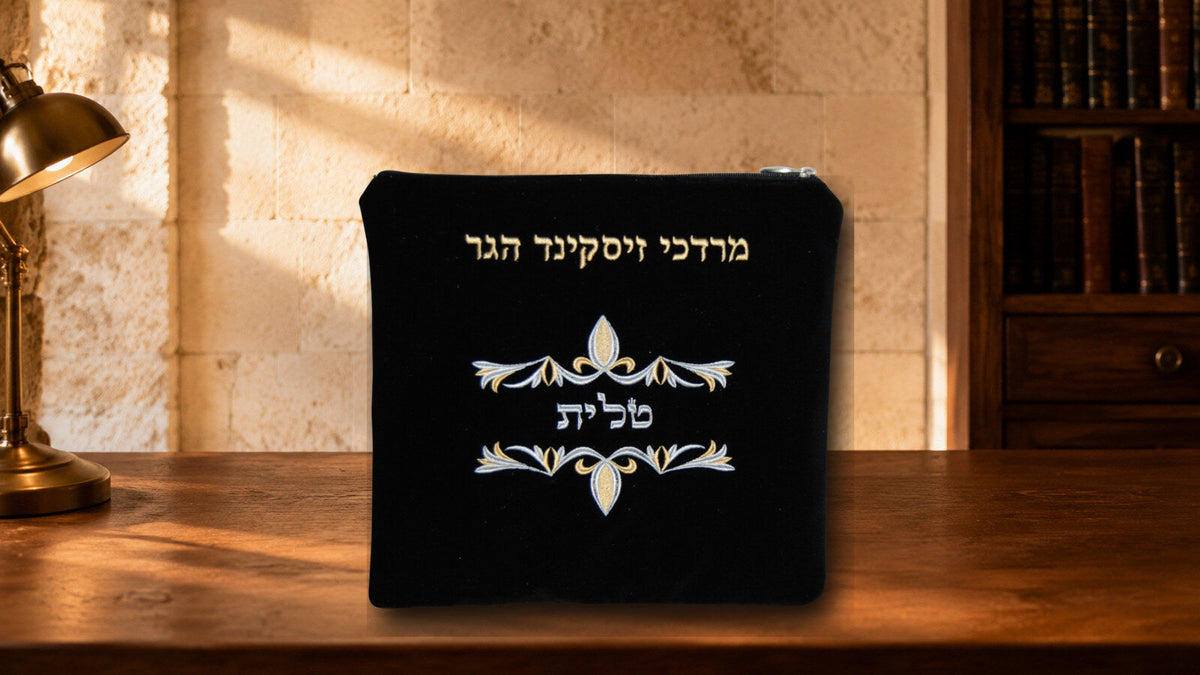
How to Choose a Tallis & Tefillin Bag: Size, Material & Personalization
A tallis and tefillin bag set is easy to choose by looks alone. The harder—and more important—question is whether it will fit the way you actually use it. A beautiful bag can still be frustrating if the tallis has to be forced inside, the tefillin bag is the wrong configuration, or the outer cover is too bulky for your regular commute.
This guide is for someone buying a first set for a Bar Mitzvah or chasunah, replacing a worn daily bag, or choosing a meaningful gift. It focuses on the practical decisions: size, configuration, material, protection, personalization, and travel. For questions about how tefillin should be handled or stored in a particular situation, ask your rav; this is a shopping guide, not personalized halachic guidance.
The short answer: choose the contents before the design
Before comparing embroidery or colors, decide exactly what the bag must hold. Measure the folded tallis, count the tefillin bags or cases that will go inside, and note any extras you carry regularly. Then check the dimensions and included pieces on the individual product page.
A good set should close without pressure, keep the contents organized, and fit comfortably inside the backpack, briefcase, suitcase, or shul cubby where it will normally be carried. Start with Judaica Square’s live Tallis & Tefillin Bags collection to compare current materials and configurations.
First, understand what the listing includes
Product names can sound similar even when the pieces are different. Read the selected variant carefully rather than assuming that every photo represents a complete set.
Tefillin bag
This is the smaller bag intended for tefillin. Some products are offered as a tefillin bag by itself; others include it only as part of a matching set. If the person uses more than one pair of tefillin, confirm that the chosen configuration is designed for the additional bags or cases.
Tallis bag
This is the larger bag for a folded tallis (tallit). Depending on the size and construction, it may also hold a smaller tefillin bag. Do not assume that a tallis bag will fit every tallis or every combination of items.
Matching set
A matching set usually pairs a larger tallis bag with a coordinating tefillin bag, but exact contents vary by product and selected option. The photo may show multiple pieces for design reference, so use the variant name and description as the source of truth.
Outer protector or carrying case
A clear zippered protector, structured case, or waterproof-style shell adds another layer between the textile or leather bag and daily wear. It can be useful for commuting and travel, but it also adds thickness. Confirm that the protector matches the bag size rather than buying by appearance alone.
How to choose the right size
There is no single “standard” size that works for every family, tallis, case, and minhag. Manufacturers may also use names such as Bar Mitzvah, large, extra-large, set, or double set differently. The most reliable method is simple: measure your own contents and compare those measurements with the exact selected variant.
- Fold the tallis the way it will be stored. Measure its width, height, and thickness without compressing it.
- Measure the tefillin setup. Include the actual cases and any inner bags that will travel together.
- Add the regular extras. A small siddur, mirror, retzuos protector, or other accessory changes the required space.
- Check the opening, not only the face dimensions. A bag can be wide enough on paper yet awkward to load if the zipper opening is narrow.
- Leave comfortable room. The zipper should close smoothly without pressing or bending the contents.
If the tallis itself has not yet been chosen, read our first tallis buying guide before ordering the bag. Choosing the tallis first prevents guesswork.
Which material fits your routine?
Material changes the feel, weight, structure, care, and formality of the set. Judaica Square’s current assortment includes leather, velvet, embroidered fabric, raw silk, microsuede, and structured waterproof-style cases. Availability changes, so compare the live product pages rather than relying on a fixed list.
Velvet: classic and formal
Velvet is the traditional look many buyers picture first: deep color, a soft hand, and embroidery that reads clearly. It suits a classic Bar Mitzvah or chassan set and can feel especially appropriate for Shabbos and Yom Tov. The tradeoff is that lint, dust, and pressure marks may be more visible, so a well-fitting outer protector is helpful for frequent transport.
Leather: structured and substantial
Leather has a more structured, tailored feel and is often chosen for a milestone gift or long-term daily use. Grain, finish, softness, and weight vary considerably from one product to another. Look closely at the product photographs and description, and remember that a structured set may take more room in a backpack than a soft fabric bag.
Microsuede, raw silk, and embroidered fabric: lighter visual options
These materials can offer more color, artwork, and texture than a traditional black velvet or leather design. They are worth considering when the recipient prefers something expressive or lightweight. Care needs depend on the actual fabric and construction, so follow the information supplied with that specific item.
Structured or waterproof-style case: protection first
A hard-shell or waterproof-style carrying case can make sense for a student, commuter, or frequent traveler. Check the closures, handle, pocket layout, and interior capacity. “Waterproof” or “water-resistant” claims should be read exactly as the product describes them; a structured case is not a reason to expose sacred items to rain or rough handling.
Should the tallis and tefillin bags match?
Matching is a design preference, not the only practical option. A coordinated set makes a polished gift and is easy to identify as one package. Separate bags can be better when the person already owns one piece, needs a different size for each use, or wants a more protective everyday tefillin bag alongside a special tallis bag.
For a wedding gift, the live Chosson Tallis Bags collection is a useful place to compare coordinated leather designs. For a Bar Mitzvah, Judaica Square’s Bar Mitzvah Gifts collection places bag sets alongside other practical milestone gifts.
Personalization: beautiful when the details are right
A name or initials can turn a useful bag into a personal simcha gift. It also helps distinguish similar black or navy bags in a busy shul or yeshiva. But personalization needs careful review before the order is placed.
- Confirm the exact spelling. For Hebrew, send the precise letters rather than relying on an English transliteration.
- Check where the name will appear. Placement may differ by size or design.
- Review thread color and visibility. Subtle tone-on-tone embroidery feels refined; higher contrast is easier to identify quickly.
- Verify what is being personalized. A set may offer a name on one piece, both pieces, or only selected variants.
- Read the product’s customization terms. Options, proofing, timing, and return eligibility can vary by item.
If the listing offers a proof or preview, check every letter, accent, and spacing detail. A two-minute review is much easier than correcting a personalized piece later.
Choosing for a Bar Mitzvah, a chassan, or daily replacement
For a Bar Mitzvah
Prioritize clarity and durability. Confirm whether the boy needs a tefillin-only bag, a matching tallis-and-tefillin set, or room for a future tallis. Choose a design he will be comfortable carrying every day, and ask the parents about the required configuration before personalizing it.
For a chassan
A chassan set is often selected as a coordinated gift, so style and presentation matter. The practical checks still come first: the tallis size, number of tefillin bags, preferred material, and how the set will be transported after the wedding. Confirm family preferences before ordering Hebrew lettering or a prominent design.
For an everyday replacement
Use the old bag as a measuring reference, then improve the part that caused trouble. If the zipper was always strained, size up or reduce what is carried inside. If the fabric showed wear from commuting, add a proper protector or choose a more structured case. If the bag was constantly misplaced among similar ones, choose clear personalization or a distinct but dignified color.
Travel and everyday protection
The best travel setup is not necessarily the largest one. It is the smallest configuration that holds everything comfortably and stays organized from door to destination.
- Keep the bag where it will not be crushed by shoes, books, or hard luggage corners.
- Use a protector that fits without forcing the zipper.
- Avoid loose liquids in the same compartment.
- Choose a distinctive bag tag or personalization that does not cover or damage the bag itself.
- Before leaving, count every inner bag and case rather than checking only the outer carrier.
For air travel, commuting, or any situation involving unusual handling, ask your rav if you have questions about the proper way to carry or safeguard tefillin.
A five-minute buying checklist
- Who will use it, and for which daily or milestone need?
- Is this a tefillin bag, tallis bag, matching set, or outer case?
- What are the folded measurements of every item going inside?
- Does the selected variant include the required number of pieces?
- Will the material suit everyday wear, formal use, or frequent travel?
- Does the protector match the bag’s size and thickness?
- Is every Hebrew or English personalization detail confirmed?
- Will the complete set fit the backpack, suitcase, or shul storage space?
Frequently asked questions
What size tallis and tefillin bag should I buy?
Measure the folded tallis and the complete tefillin setup, then compare those dimensions with the exact selected variant. Do not rely only on labels such as Bar Mitzvah, large, or set; sizing names are not universal.
Is leather or velvet better?
Neither is automatically better. Velvet offers a classic soft look, while leather is usually more structured and tailored. The right choice depends on the recipient’s style, how often the bag travels, the desired weight, and the care the material requires.
Can a name be added to every bag?
No. Personalization depends on the product and selected option. Check the live listing for available lettering, placement, colors, timing, proofing, and terms before ordering.
Do I need a plastic protector or hard case?
It is not necessary for every buyer, but it can reduce ordinary wear from dust, friction, and commuting. Choose one that fits the actual bag without squeezing the contents, and follow any care guidance on the product page.
Choose the bag around the way it will be used
A tallis and tefillin bag should feel dignified, personal, and easy to live with. Start with the contents, confirm the configuration, measure carefully, and only then choose the material and design. That order turns a beautiful purchase into one that works smoothly every day.
Browse Judaica Square’s live Tallis & Tefillin Bags collection, or visit the Chosson Tallis Bags collection for coordinated milestone designs.