




ArtScroll Children's Books Guide: Stories, Middos, Yom Tov & Family Reading
A child who loves funny school stories may leave a biography untouched. Another child will happily listen to a true story about chessed but struggle to read a chapter book independently. Choose the reading experience first, then the title.
These ArtScroll examples give you four different starting points. They are based on the books' catalog descriptions, so use a sample page and your knowledge of the child to make the final choice.
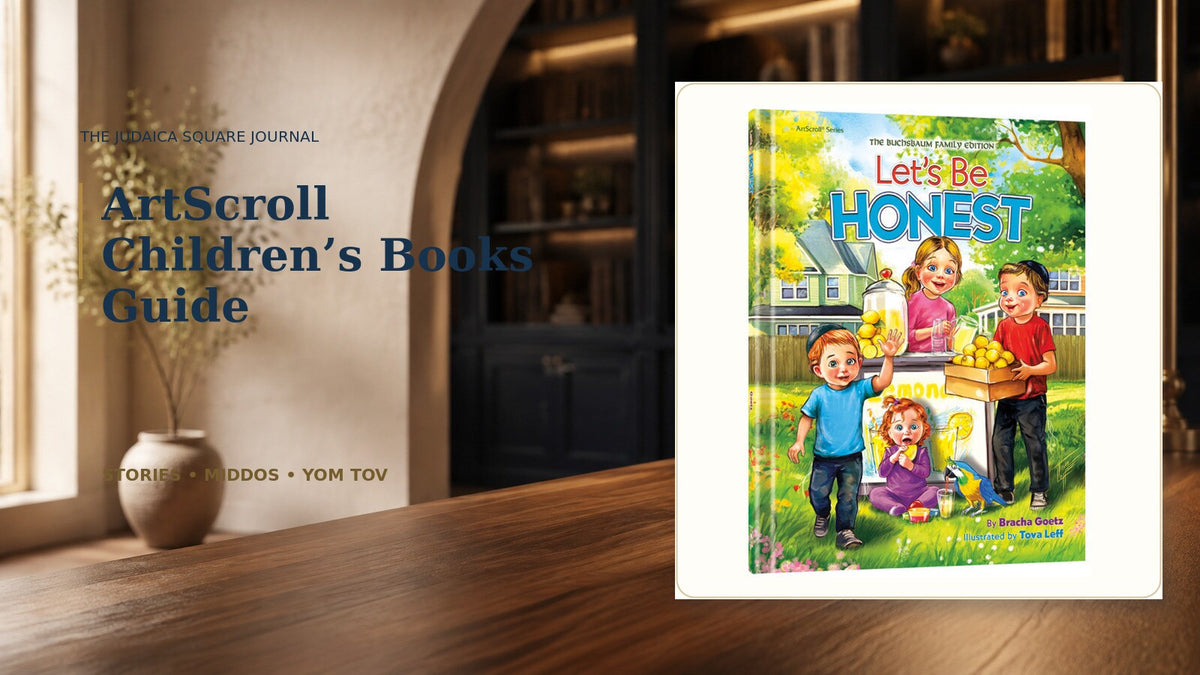
For a conversation about honesty: Let's Be Honest
Let's Be Honest uses familiar situations around telling the truth, admitting mistakes and respecting other people's belongings. The publisher's description gives an age range of 4–8. Treat that as a starting point: a younger child may enjoy it as a read-aloud, while an older child may respond to discussing the situations.
Try one open question after reading: “What could the child do next?” You do not need to turn the story into a lesson sheet. Let the child notice the choice in the story and offer an answer.
For a young reader who wants humor: PJ Pepperjay
The Adventures of PJ Pepperjay, by Yehudis Backenroth, follows a boy through comic mishaps at school and elsewhere. It is a different purchase from a formal middos book: the attraction is the character and the humor.
Before buying for independent reading, compare a page with a book the child already reads comfortably. Page count alone does not tell you sentence difficulty or how much help the reader will need.
For a shared biography: The Story of Rebbetzin Henny Machlis
The Story of Rebbetzin Henny Machlis introduces the Machlis family's hospitality and chessed in Jerusalem. This is a true-life subject for a child who enjoys hearing how people live their values, or for a family choosing a book to read together.

Ask which detail the child remembers, rather than expecting an instant moral. A conversation about making a guest feel welcome may grow naturally from the story. Check the text before deciding whether the child will read it alone or with you.
For a reader ready for a continuing school story: The Starlight Sisters
The Starlight Sisters, Volume 1: Ora's Story: Second Fiddle, by Libby Lazewnik, begins a series set around a Bais Yaakov performing-arts school. Ora's story involves friendship, comparison and finding her place.
Choose it for a reader interested in that setting and a continuing narrative. If it is a gift, ask a parent whether the subject and style suit the family and whether the child already owns the first volume. Starting with a later installment can be frustrating for a reader who wants the whole story.
Build a small reading rotation
You might keep one familiar favorite, one book the child chose, and one shared read-aloud within reach. For example, a funny story can sit beside a family biography without either being expected to serve the other's purpose.
Let the child reread. A new purchase is useful when it adds something wanted; replacing every familiar book with a supposedly more advanced one can make the shelf less inviting.
Buying for somebody else's child
Ask for the name of one recently enjoyed book, the preferred language and whether the child reads independently. Those three answers are more useful than age alone. Check ownership before buying a series, and confirm the family's preferences for story themes.
For seasonal reading, use our Sukkos books by reading stage and Rosh Hashanah and Yom Kippur book guide. For the youngest recipients, see the Jewish baby-gift guide.
Browse ArtScroll children's books with a reader and a purpose in mind, rather than a fixed list every child is expected to love.