




Chanukah Gifts for a Rebbi, Morah, Teacher or Host
You have a Chanukah invitation on the calendar, a class collection in the group chat, and three people you would sincerely like to thank. The hard part is not finding something to buy. It is choosing a gift that feels personal without being awkward, useful without assuming too much, and Jewish without turning Chanukah into a shopping contest.
This guide is for that exact moment. It separates four different relationships—a child’s rebbi, a morah or teacher, a rav or mentor, and a host—because the right choice depends far more on the recipient than on the price tag.
The short answer: begin with a warm note. Then choose one modest item that suits the person’s role and home. For a rebbi or rav, a carefully selected sefer can be meaningful if you know what he learns. For a morah or teacher, a useful Chanukah piece or coordinated class gift is often easier than a highly personal item. For a host, choose something the household can enjoy or use without creating extra work.
First: a Chanukah gift is a thank-you, not an obligation
Chanukah begins at nightfall on December 4 and ends at nightfall on December 12 in 2026. The central mitzvah is lighting the menorah; presents are not the measure of the Yom Tov. Chabad’s overview explains that the long-standing gift custom is Chanukah gelt, traditionally given to children with an opportunity to give some to tzedakah. That is a helpful frame for adult gift giving too: appreciation should add warmth and meaning, not pressure.
A sincere handwritten note can stand on its own. If you add a purchased gift, let the note explain why: one patient phone call, a child who came home excited to learn, a Shabbos invitation when you needed it, or a vort that stayed with you. Specific gratitude makes even a small gift feel considered.
Choose by relationship, not by a generic gift list
For your child’s rebbi
A rebbi gift should acknowledge his investment in the child. The safest starting point is a note from the parents plus a few lines or a drawing from the child. A sefer can be an excellent addition, but only when you know his interests well enough to avoid a duplicate or a topic he does not use.
For a class gift, coordinate quietly before buying. One well-organized presentation from the class is usually more useful than many families independently choosing the same item. Check any school or class policy, name every participating family accurately, and never make a child feel different because a family did not join the collection.
For a morah or teacher
Think practical, compact and easy to exchange if necessary. A Chanukah brachos piece can be a thoughtful seasonal gift when you know it fits the recipient’s home and text preference. A neutral gift card accompanied by a meaningful class note is also entirely respectable; the personal element can come from the words rather than the object.
If several teachers, assistants or therapists help your child, make the appreciation consistent. The gifts do not need to be identical, but the care should not depend on who happens to be most visible at pickup.
For a rav, mentor or chavrusa
Knowledge matters more than grandeur. Before choosing a sefer, consider language, topic, author, edition and whether the recipient is likely to own it already. A new English title may be a pleasure for someone who shares divrei Torah at the table; it may be less useful for someone whose learning shelf is highly specialized. When you are unsure, ask a family member or close talmid rather than guessing.
For a Chanukah host
A host gift should not create a new assignment. Avoid food when you do not know the household’s kashrus standards, allergies or current menu. Avoid large décor unless you know the family’s taste and storage space. A small item for the candle-lighting area, a book the family can enjoy later, or a simple note sent the following morning can be more gracious than an elaborate surprise at the door.
Five thoughtful gift directions that actually make sense
1. A note from the child or family
This is the one idea that fits every recipient. Mention a real moment. “Thank you for everything” is kind; “Thank you for helping him feel proud when he mastered that first Mishnah” is memorable. A class card can include one short line from each child rather than a long list of signatures.
2. A Chanukah brachos tabletop piece
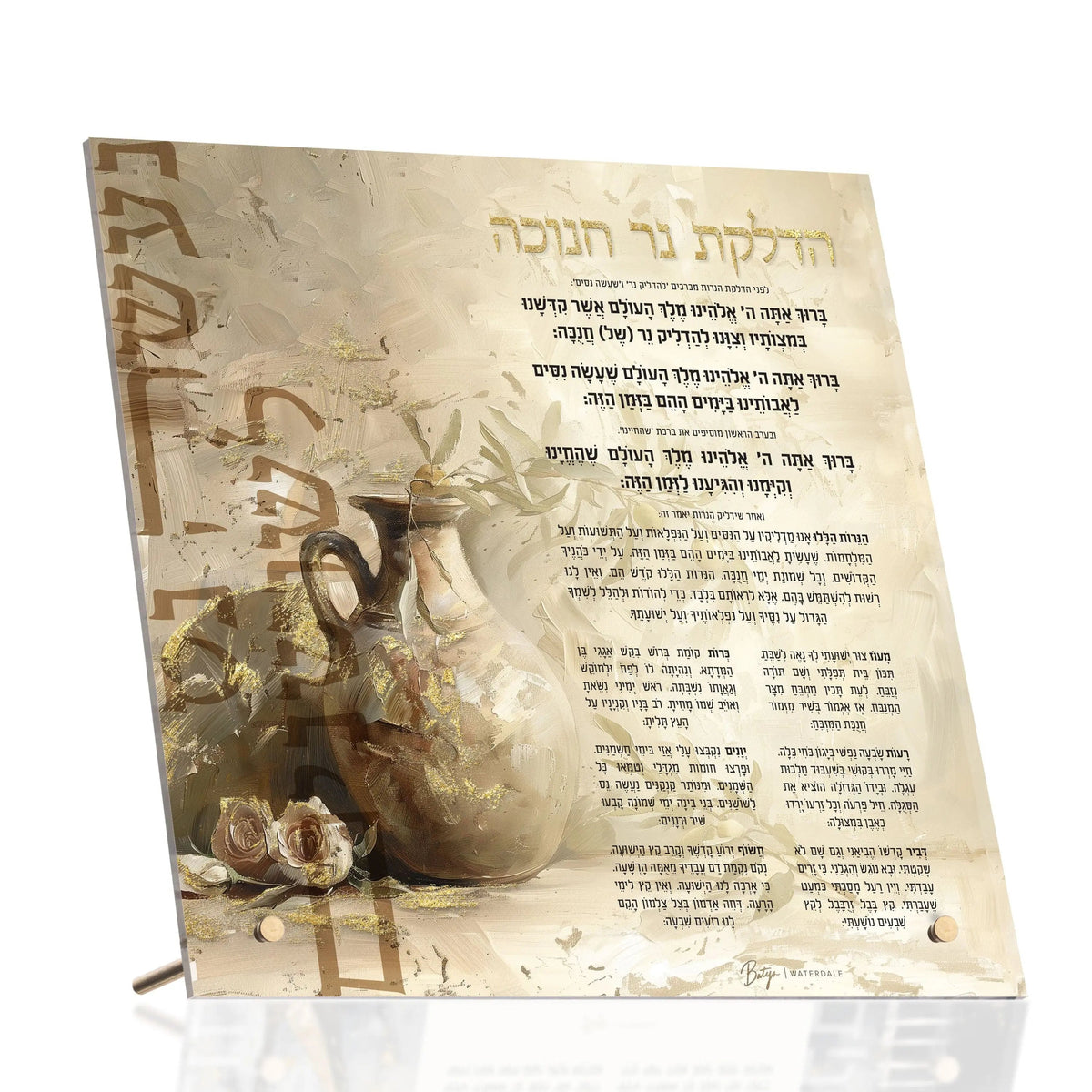
A brachos plaque belongs naturally near the menorah and can be brought out year after year. The Painted by Batya Chanukah Brachos Tabletop is an 8-by-8-inch crystal tabletop plaque containing the Chanukah brachos, Haneiros Hallalu and Maoz Tzur. It works best when you already know the recipient appreciates decorative Judaica.

If you need a smaller option, the Classic 2.0 Chanukah Brachos Basics Tabletop is a 5-by-8-inch crystal piece with silver or gold and Ashkenaz/Sefard or transliterated text options. Choose the text intentionally; “close enough” is not a good approach to a tefillah-related gift. You can also compare the store’s Chanukah candle-lighting cards after checking that the format and wording suit the recipient.
3. A sefer chosen for the person—not merely for the season
Moadim Perspectives: Chanukah–Purim is an English paperback built around teachings of Rav Samson Raphael Hirsch, Rav Dr. Salomon Breuer and Rav Dr. Joseph Breuer. It may suit a recipient who appreciates Hirschian thought and English hashkafah.
Behind the Yomim Tovim by Rav Binyomin Wurzburger is a 438-page English hardcover organized as concise Torah insights for Yom Tov meals, with mareh mekomos for further study. That makes it a different kind of choice: broader than Chanukah alone and especially relevant to someone who regularly shares divrei Torah with family or talmidim.
Neither title is automatically “the best.” The better gift is the one that matches the person. Browse the focused Chanukah books collection, then verify the exact language, author, format and intended reader before ordering.
4. A compact candle-lighting companion
The Leather Chanukah Brachos Booklet is a compact embossed booklet containing the brachos and songs, with gold, silver and white cover options. It is easier to place in a small gift bag than a large décor item and can be useful in a home where the candle-lighting text is not already displayed.

5. Gelt with a giving element
For a child, grandchild or student, Chanukah gelt can connect celebration with responsibility. Chabad notes the custom of encouraging children to give a portion to tzedakah. You can make that concrete with an envelope divided into “keep,” “save” and “give,” or by letting the child choose an appropriate cause with a parent. This is different from a teacher gift, but it keeps the broader family celebration rooted in a recognizably Jewish Chanukah practice.
Four real-life decisions
“My child wants to give something to one rebbi.”
Have the child write one specific sentence. If you know the rebbi’s learning interests, add a carefully chosen sefer. If you do not, a modest neutral gift or gift card is better than guessing at a specialized title.
“The class is collecting for the rebbi or morah.”
Confirm the school’s policy, set a voluntary contribution, and avoid publishing who gave what. Ask one parent to handle the gift and a second to verify the names on the card. A meaningful class message can do more than increasing the amount.
“We are going to a Chanukah gathering and barely know the host.”
Choose small and low-assumption. A handwritten thank-you, a compact brachos piece or a book for later is safer than food, a large menorah or décor selected for someone else’s home. Hand it over without expecting it to be opened or used that evening.
“The host is close family and already has everything.”
Skip the object if it will become clutter. Bring a note, contribute to a cause meaningful to the family, or offer help before and after the gathering. Thoughtfulness is not measured by how much shelf space the gift occupies.
A five-minute checklist before you order
- Relationship: Is this for a teacher, rav, host or child? Do not use one list for all four.
- Fit: Do you know the recipient’s interests, nusach, language preference, home style or kashrus needs?
- Duplication: For seforim and common Chanukah pieces, can you discreetly check what they already own?
- Policy: For a class gift, have you checked the school or group’s rules and kept participation voluntary?
- Words: Is there a note that explains the gratitude?
- Timing: Will the gift arrive before you need it? Recheck the product page and current fulfillment choices before ordering.
Frequently asked questions
Are you supposed to give Chanukah gifts to teachers?
No purchased gift is required. A sincere note is appropriate on its own. If your family or class chooses to give something, keep it voluntary and proportionate, and follow any school policy.
What is a good Chanukah gift for a rebbi?
A specific note from the child is the best starting point. A sefer can be meaningful when you know the rebbi’s interests and can avoid buying a duplicate. When you do not know, a modest neutral gift or coordinated class gift is safer.
What should I bring to a Chanukah host?
Choose something that does not require immediate serving, storage or display. A small candle-lighting companion, a carefully chosen book or a thank-you note can work. Avoid food if you do not know the household’s kashrus standards and allergy needs.
Should every teacher receive the same gift?
Not necessarily. The gifts can reflect different relationships, but try to be consistent in care and respect. Remember assistants, therapists and support staff who meaningfully help the child, and do not make participation in a group collection public.
For help with the mitzvah side of the Yom Tov, see the Chanukah candles, oil and wicks guide. For selecting the menorah itself, read the Chanukah menorah buying guide. Product choices can be practical; questions about halachah or family minhag should go to your rav.