





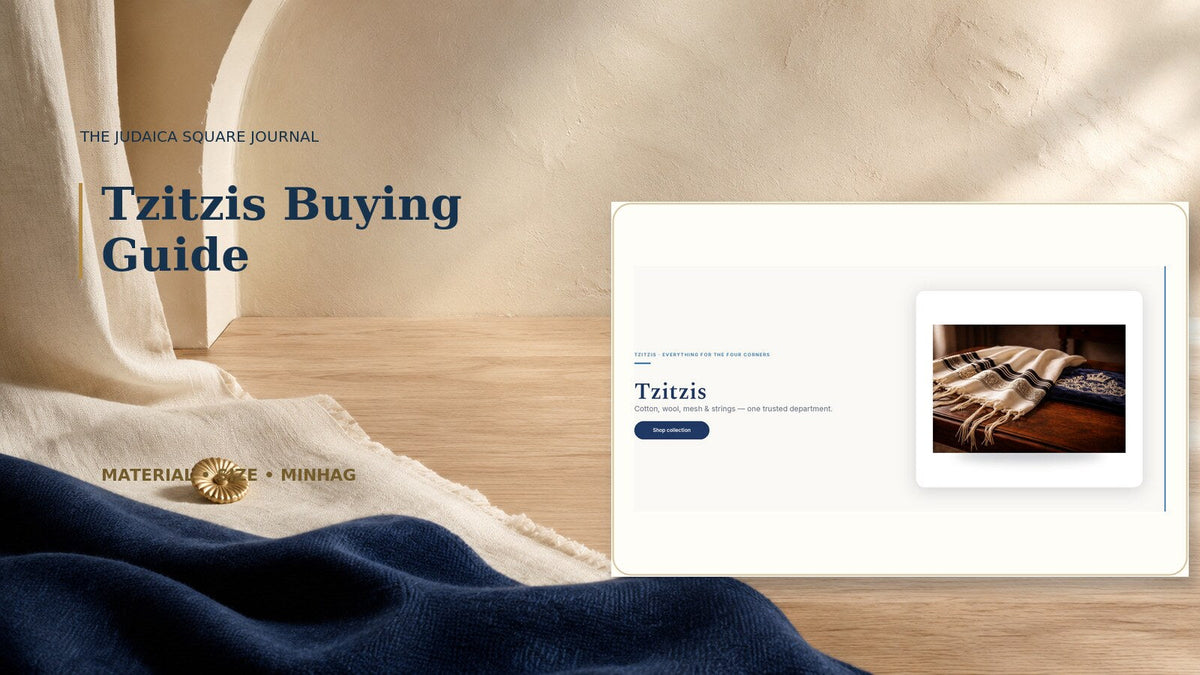
How to Buy Tzitzis: Cotton vs. Wool, Sizing, Styles & Minhag
Buying tzitzis looks simple until you see the choices: cotton or wool, mesh or undershirt, round neck or V-neck, thin strings or thick strings, Ashkenaz, Chabad, Sefardi, adult sizing, children’s sizing, and different brand fits.
The right pair is halachically appropriate for the wearer, sized correctly, and comfortable enough to wear consistently. Start with minhag and family practice, then choose material and style, and only then choose the size.
This is a shopping guide, not a halachic ruling. Garment material, measurements, holes, strings, and tying can depend on community practice and psak. When in doubt, follow your rav and family minhag.
Browse all tzitzis and tzitzis strings or keep the Judaica Square tzitzis size guide open while comparing options.
Start with the wearer
A young child needs comfort, washability, easy dressing, and room to grow. A Bar Mitzvah boy may need adult sizing, a family minhag, and a more grown-up fit. An adult wearing tzitzis all day should consider climate, work, movement, layering, laundry, and how the garment feels under clothing.
For a first adult pair, the Bar Mitzvah tzitzis collection gives a narrower starting point.
Cotton vs. wool vs. mesh
Material affects comfort, warmth, drape, care, and halachic preference. Do not choose on comfort alone if the wearer has an established family or community practice.
| Material | Why people choose it | What to consider |
|---|---|---|
| Wool | Traditional feel and substantial drape; preferred by many for halachic reasons | Warmer, needs gentler care, and may feel less comfortable against sensitive skin |
| Cotton | Soft, familiar, breathable, and common for daily wear | Can shrink or wrinkle; confirm garment and strings match the wearer’s minhag |
| Poly-cotton | Easy-care and practical, especially for children | Fiber content and construction vary by product |
| Mesh / sport | Airflow for heat, camp, sports, or active work | Fit and durability differ by brand; confirm the style works for the wearer |
| Undershirt style | Familiar shirt-like fit and easy layering | Neck opening, sides, material, and fit differ; do not treat all undershirt styles as identical |
Compare cotton tzitzis, wool tzitzis, mesh and sport tzitzis, and undershirt tzitzis.
How tzitzis should fit
Do not buy by age alone. Measure the wearer’s chest and torso, compare a current pair that fits well, check the arm and neck openings, and use the exact product’s size chart when available. For children, leave reasonable room to grow, but avoid buying so large that the garment bunches, twists, or becomes uncomfortable.
Product size labels are not a psak about minimum halachic dimensions. If that question matters for the wearer, ask a rav.
Round neck, V-neck, or undershirt?
A round neck feels familiar and tends to stay centered. A V-neck can sit lower under a shirt collar. An undershirt or T-shirt style can be easier for someone who dislikes a loose garment. In every case, compare the construction, side openings, material, and fit before buying.
Thin or thick strings?
String thickness affects appearance, weight, and durability. Thick strings look more substantial; thin strings are lighter and may sit more neatly under clothing. Check the wearer’s minhag, tying method, holes, string standard, and whether the garment is sold tied or without strings.
Ashkenaz, Chabad, Sefardi, and other minhagim
The garment may look similar while the holes and keshira differ. That is why “adult cotton tzitzis” is not a complete order description. Judaica Square has common minhag paths including Ashkenaz tzitzis, Chabad tzitzis, and Sefardi tzitzis. If buying for someone else, ask what he already wears or request a clear photo of the current pair.
How many pairs should you own?
There is no universal shopping number, but the laundry cycle gives a practical answer. Children, campers, and active wearers usually need more backup pairs. Adults may prefer different styles for daily use, work, warm weather, and Shabbos. Before buying a large quantity, test one or two pairs in the correct size and material.
Washing and care
Always follow the garment label first. Protect the strings with a tzitzis protector or suitable laundry bag, avoid high heat unless the manufacturer permits it, straighten and inspect the strings after washing, and ask a rav if a string tears, a knot loosens, or the garment rips near a corner.
Common buying mistakes
The most common mistakes are buying only by age, choosing the coolest material before checking minhag, assuming every size label is standard, ordering the wrong keshira as a gift, and buying too many before testing the fit.
Choose comfort without guessing
The best tzitzis are appropriate for the wearer, correctly sized, and comfortable enough to wear every day. Browse all tzitzis, use the tzitzis size guide, or visit Judaica Square in Lakewood with a current pair so the staff can help compare the fit.
Quick comparison
| Fabric | Good to know |
|---|---|
| Wool | Traditional choice; many rabbonim prefer wool for the tallis katan |
| Cotton | Soft and breathable for daily wear |
| Mesh | Airy and light for hot weather |
| Undershirt style | Worn as an undershirt with the strings attached at the corners |
Tzitzis to compare


See every option in our tzitzis collection, and read the tallis buying guide if you are shopping for a tallis gadol too.
Frequently asked questions
What size tzitzis should I buy?
Tzitzis are sized like shirts, with numbered sizes for boys and adults. Each listing shows its sizes; if you are between sizes, many people size up so the garment covers well.
Wool or cotton tzitzis?
Many rabbonim prefer wool, and some wear wool all year. Cotton and mesh are cooler and popular for daily wear. Ask your rabbi which your family follows.
What does 1 hole or 2 holes mean?
It refers to how many holes are made at each corner for the strings. Different communities follow different customs, so choose the one your family uses.
How do I wash tzitzis?
Follow the care label. Many people wash them in a laundry bag or tie the strings loosely so they do not tangle.
Ships nationwide from Judaica Square, with local pickup available in Lakewood, NJ.