




Simchas Torah With Kids: Hakafos, Flags & a Calmer Night
Simchas Torah can be one of the happiest nights of the year for children—and one of the easiest nights for parents to overplan. The shul is fuller than usual, the dancing is louder, bedtime is later, and the child who was thrilled at home may suddenly decide that the crowd is too much.
A calmer experience begins before Yom Tov. Find out how your shul runs hakafos, explain only what your child needs to know, choose one age-appropriate item to hold, and decide in advance which adult is supervising. The goal is not to keep every child in shul for every minute. It is to help each child experience genuine simchas haTorah at a level he or she can enjoy.
If you are preparing now, Judaica Square’s live Simchas Torah and Shemini Atzeres collection brings together seasonal books, flags, music, children’s items, and other Judaica in one place.
The quick plan for Simchas Torah with children
Before getting into ages and products, make these five decisions:
- Confirm the schedule. Ask when children’s hakafos begin, whether there is a separate program, and which part your family normally attends.
- Choose the child’s participation item. A flag, soft Torah, or nothing at all can each be the right choice.
- Dress for movement. Comfortable shoes and an easy outer layer often matter more than an elaborate outfit.
- Name the supervising adult. In a crowded shul, “we are all watching” can quickly mean that no one knows who is watching.
- Plan the exit. Decide what you will do if a toddler is finished, a child becomes overwhelmed, or siblings need different schedules.
That small amount of preparation handles most of the stress before it starts.
When is Simchas Torah in 2026?
Outside Israel, Shemini Atzeres begins at sunset on Friday, October 2, 2026. Simchas Torah begins at sunset on Saturday, October 3, and ends after nightfall on Sunday, October 4. In Israel, Shemini Atzeres and Simchas Torah are observed together as one day. These dates are confirmed in Chabad.org’s 2026 calendar.
Because the schedule, children’s program, and hakafos arrangement vary from shul to shul, use the posted local times rather than assuming that this year will run exactly like last year.
What children will see during hakafos
On Simchas Torah, the annual Torah-reading cycle is completed and immediately begun again. The Torah scrolls are taken out, and the kehilla sings and dances during hakafos. In many communities there are hakafos at night and again in the morning; some shuls also have additional customs on Shemini Atzeres night.
For a young child, the practical experience is simpler: a full room, singing, circles of dancers, people holding Sifrei Torah, and children carrying flags or soft Torahs. A preschooler does not need a long explanation. Try three clear sentences before Yom Tov:
- “We are going to shul to dance for the Torah.”
- “It may be loud and crowded, and you will stay with me.”
- “When you are tired, we will take a break.”
That tells the child what will happen, what the boundary is, and what help is available.
Choose by age and temperament
Babies and young toddlers
For this age, success may mean a brief visit, watching one round of dancing, and leaving while the child is still content. A baby does not need an accessory. If a toddler wants to hold something, choose one simple, lightweight item that the child can manage without constant help.
Think through the practical details before Yom Tov: where the stroller can be left, whether there is a quieter place to stand, which entrance is easiest, and whether the child is likely to need a coat, drink, or diaper change. Follow your shul’s rules and your family’s halachic guidance about what may be brought or carried.
Preschoolers
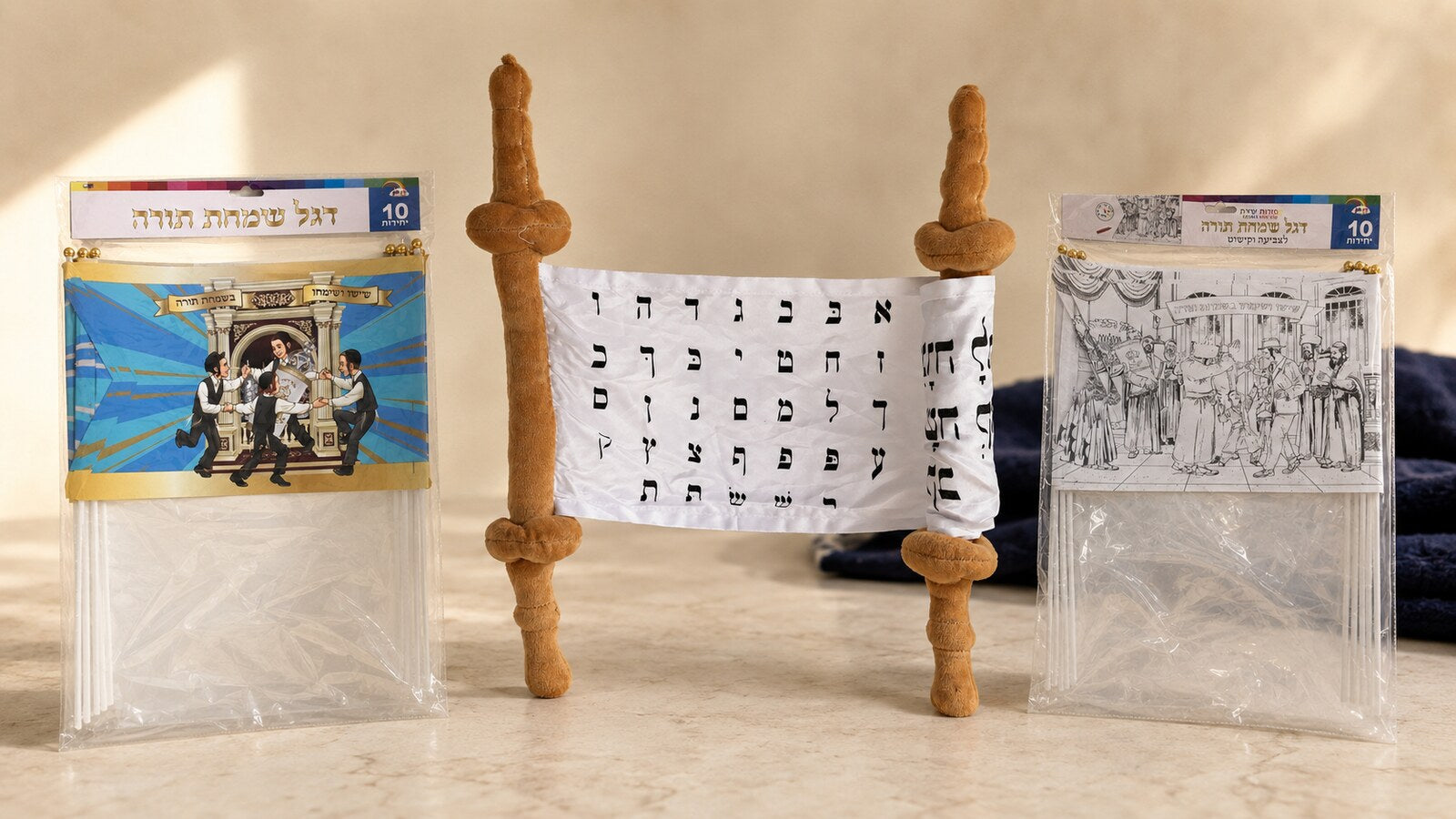
Preschoolers often love having a visible role. A flag gives them something to hold while they watch or join a children’s circle. A creative child may enjoy preparing a flag before Yom Tov; Judaica Square carries a decorate-your-own Simchas Torah flag set that can turn the preparation itself into part of the excitement.
Do the craft early enough that it can dry, be assembled, and be labeled before Yom Tov. Let the child know where the flag stays when hands are needed for walking, holding an adult’s hand, or taking a break.
Early elementary children
Children in the early elementary years may be ready to join a group, follow the singing, and understand that the celebration marks finishing and beginning the Torah again. They may prefer a colorful flag, a soft Torah, or a small responsibility such as helping a younger sibling find the family’s place.
A 10-pack of illustrated Simchas Torah flags can work for siblings, cousins, or a small children’s group. For a child who would rather hug an object than wave one in a crowd, a soft Alef-Beis Torah offers a different kind of participation.
Older children
Older children usually need less gear and more ownership. They may want to stand with friends, follow parts of the tefillah, help a younger sibling, or prepare something to share about finishing and restarting the Torah. Avoid turning them into unpaid babysitters for the whole night, but a defined job can make the experience feel meaningful.
If a child connects through reading, choose a book before Yom Tov and let the learning build anticipation. Browse the broader children’s holiday books collection, or use the Sukkos books age-by-age guide to match the reading level and attention span.
Flag, soft Torah, book, or activity—which is best?
Choose a flag for movement and group participation
A flag is easy to understand: the child carries it during the celebration. Before buying, check whether it is one piece or a multipack, whether it arrives assembled, and whether the size suits the child who will use it. If you are ordering for a class, shul, or family group, count the actual children and add only the reserve you genuinely need.
Choose a soft Torah for comfort and imaginative play
A soft Torah can be especially appealing to a younger child who wants to imitate the dancing but prefers something close to the body. It can also continue to be used for play after Yom Tov. Check the product description and photograph rather than assuming that every children’s Torah has the same size, fabric, or construction.
Choose a book to prepare before the celebration
A story or picture book does a different job. It helps a child recognize the words, people, and objects before entering a busy room. Read it during the week beforehand, then refer back to one familiar idea on the way to shul.
Choose an activity for the preparation window
Coloring and craft projects are most useful before Yom Tov, when the child can create something and then look forward to using or displaying it. The live coloring and activity books collection is useful when you want a broader quiet project, not only a Simchas Torah item.
You do not need all four. One well-matched choice is better than a bag of distractions.
Prepare everything before Yom Tov
The items that create the most stress are usually the small ones left until the last minute. Before Yom Tov begins:
- write the child’s name on personal items;
- finish and assemble any craft flag;
- remove unnecessary packaging if that suits the item and your plan;
- check comfortable shoes and an outer layer;
- confirm the shul schedule and entrance;
- decide who accompanies each child;
- agree on a family meeting point;
- put anything needed for the walk or stroller in place according to your family’s practice.
For the rest of the season—from sukkah items to children’s planning—the Sukkos 5787 preparation checklist gives one organized household list. The full Sukkos 5787 department is the broadest live shopping aisle.
Make the shul experience calmer
Arrive for the part your child can handle
Staying longer is not automatically better. A toddler who happily experiences twenty minutes of singing may leave with a warmer association than one who is pushed through a much longer night. For an older child, arriving early may help because the room feels less chaotic before dancing begins.
Stand where you can leave without crossing the crowd
If your child is young, tired, or sensitive to noise, choose a place that gives you a clear route out. Do not rely on squeezing through the center once the dancing is full. Ask a gabbai or organizer where families with small children usually stand.
Use a clear handoff between adults
Say the words: “You have him now,” and wait for an answer. This matters when one parent joins the dancing, another is speaking to someone, and siblings move between groups. A direct handoff prevents assumptions.
Give permission to take a break
A child can love Simchas Torah and still dislike one loud moment. A short break does not mean the night failed. Step to the place your shul designates, reset, and decide whether returning makes sense.
Common mistakes to avoid
- Promising a specific experience before checking the shul. Programs and customs differ.
- Buying by excitement instead of age. The biggest or loudest item is not always the most usable.
- Opening crafts at the last minute. Prepare and label them beforehand.
- Bringing too many choices. One participation item is usually enough.
- Assuming older siblings will supervise. Give responsibility only when it is clear and age-appropriate.
- Ignoring the exit plan. Decide in advance what happens when one child is done.
- Treating every minhag as universal. Ask your shul what it does and follow your family’s practice.
Frequently asked questions
Are Simchas Torah and Simchat Torah the same holiday?
Yes. “Simchas Torah” is the common Ashkenazi pronunciation, while “Simchat Torah” follows modern Hebrew pronunciation. Both names refer to the celebration marking the completion and immediate restart of the annual Torah-reading cycle.
Do children need a flag for Simchas Torah?
No. Flags are a beloved custom and can help children participate, but a child does not need one to attend or enjoy hakafos. Some children prefer a soft Torah; others are happiest simply watching with a parent.
What is Kol HaNe’arim?
In many congregations, children gather for a special group aliyah known as Kol HaNe’arim. The exact arrangement and who participates can vary, so ask your shul what to expect rather than preparing a child for one specific format.
What should a toddler bring to hakafos?
Keep it minimal. Depending on the child and your family’s practice, that may mean one lightweight flag or soft Torah, an appropriate outer layer, and the normal essentials already prepared before Yom Tov. The supervising adult and exit plan matter more than the accessory.
How many flags should a shul or class order?
Count the children expected to receive one, subtract any stock already on hand, then add a modest reserve for unexpected guests or damaged pieces. Confirm the quantity in the exact product listing—one flag, ten-pack, twenty-four-pack, and bulk box are not interchangeable.
Let the child leave wanting more
The best Simchas Torah plan is not the one that keeps the family in the room the longest. It is the one that helps the child connect joy, Torah, family, and shul in a way that fits the child’s stage.
Confirm the schedule, prepare one appropriate item, choose comfortable clothing, name the supervising adult, and know when to step out. Then browse Judaica Square’s Simchas Torah and Shemini Atzeres collection for current seasonal items and prepare early enough that Yom Tov can feel like Yom Tov.