





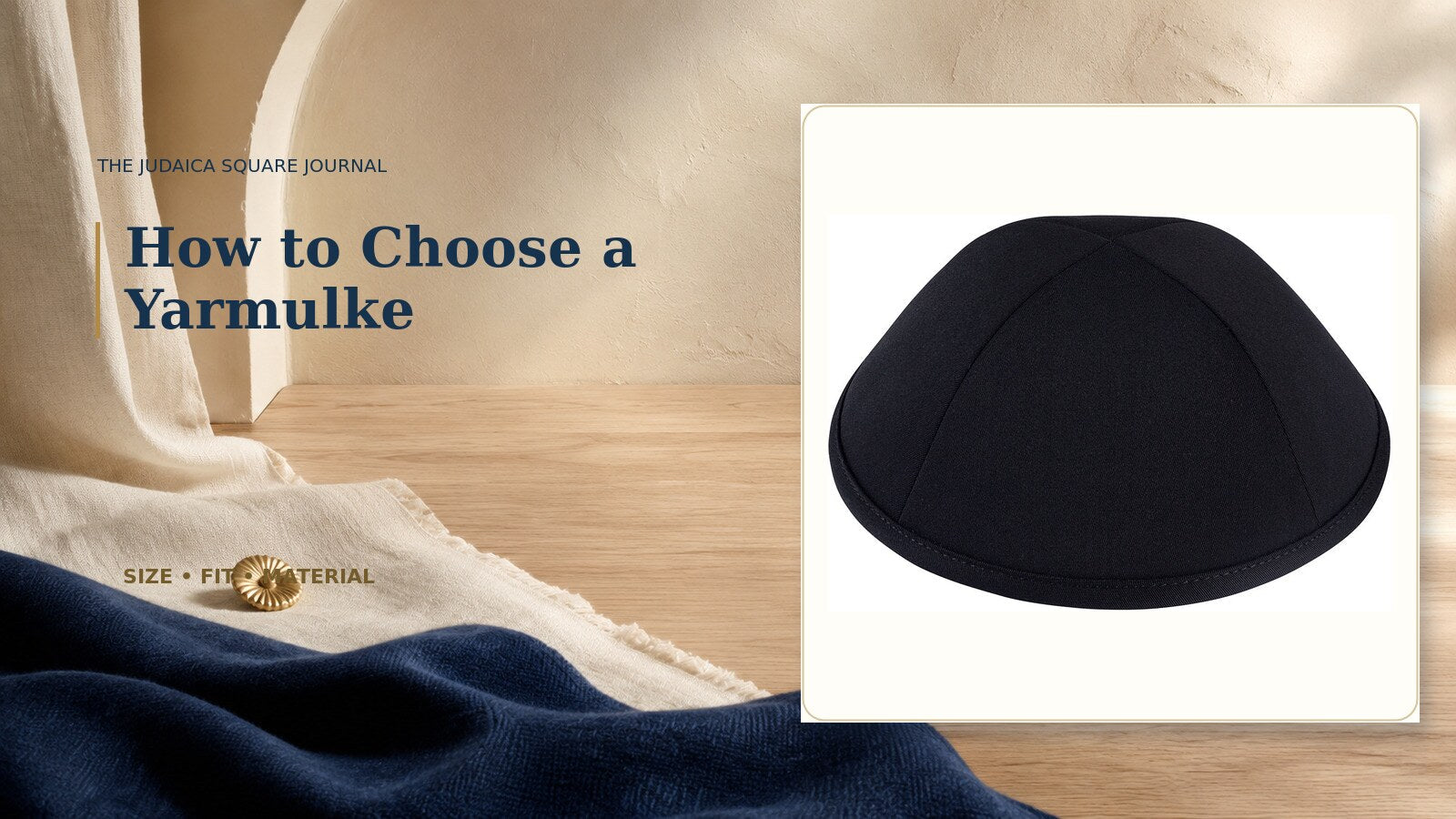
How to Choose a Yarmulke: Size, Fit, Material & Style
The best yarmulke is not simply the nicest color. It has to fit the wearer’s head, stay in place, feel right with his hair, and match how he dresses on weekdays, Shabbos, Yom Tov, school, and simchas.
Start with size and shape before material. Once the fit is right, choosing between velvet, suede, leather, linen, cotton, knit, satin, or raw silk becomes much easier.
The words yarmulke, yarmulka, kippah, kippot, and kippahs are used by different shoppers for the same general item. For shopping, use the Judaica Square yarmulka size guide for measuring help, then browse all yarmulkes and kippot.
Quick answer
If you already own a yarmulke that fits well, use it as the reference. Match the general shape first, then compare measurement, material, panel construction, rim, and whether the wearer uses a clip. Do not assume that a dome size, flat centimeter measurement, or material will fit the same across every brand.
How to find your size
Lay a well-fitting yarmulke naturally without stretching it. Identify whether it is a structured dome or a flatter kippah. Measure across the widest point according to the brand’s chart. Note the material, number of panels, rim style, and whether a clip is needed. Then compare those details with the exact product you are considering.
If you do not have a current yarmulke, use a soft measuring tape over the part of the crown you want covered. Hair thickness and placement matter, so the same person may prefer a different size after a haircut.
Dome yarmulke or flat kippah?
A dome yarmulke is constructed to curve around the head. It often feels secure and gives a fuller, more traditional silhouette. Velvet, suede, leather, and structured fabric styles commonly use dome sizing.
A flat kippah sits more lightly on the crown and is often measured in centimeters across the piece. Knit, linen, cotton, raw silk, satin, and fashion styles can fall into this category, although construction varies.
Someone who wears a size 4 dome yarmulke should not automatically order the same number or diameter in a flat style. Use the size guide as a starting point and check the product details.
How a yarmulke should fit
A good fit should sit flat without a large air pocket, stay centered during normal movement, avoid pinching, cover the amount of crown the wearer expects, work with the wearer’s hair or clips, and keep its shape without constant adjustment. If it pops upward, slides easily, or leaves pressure marks, the size or shape is probably wrong.
Materials compared
| Material | Look and feel | Best for |
|---|---|---|
| Velvet | Classic, rich, structured, traditional | Daily wear, Shabbos, Yom Tov, school, formal settings |
| Suede | Soft, understated, naturally grippy | Everyday wear, school, travel, casual polish |
| Leather | Smooth, polished, durable | Dressier daily wear, gifts, refined modern look |
| Linen / cotton | Light, textured, breathable | Warm weather, coordinated outfits, casual Shabbos |
| Knit / sruga | Flexible, breathable, grippy | Daily wear, warm climates, casual settings |
| Satin / raw silk | Smooth, formal, easy to coordinate | Weddings, Bar Mitzvahs, bulk personalization |
Compare velvet kippot, suede yarmulkas, leather yarmulkas, and iKippah kippot.
Occasion matters
For school and everyday wear, prioritize durability, comfort, and a fit that stays centered. For Shabbos and Yom Tov, a richer velvet, leather, linen, or special fabric can feel more polished. For weddings and Bar Mitzvahs, think about appearance, price, sizing, personalization, and current production timing.
For a simcha, order a physical sample before approving a large quantity. Our wedding and Bar Mitzvah kippot planning guide explains how to calculate quantity, choose a material, check wording, and approve the final proof. Check the color in natural and indoor light, test the fit on several people, and confirm personalization placement. Browse bulk and event kippot early enough to verify timing.
Children’s yarmulkes
Children need a yarmulke that stays on without becoming a daily fight. Consider hair length, school rules, clips, comfort, and whether the fabric can handle frequent wear. Do not buy dramatically large for growth; the wrong fit is more likely to be lost.
Clips and panel construction
A properly fitted dome yarmulke may stay on without a clip, especially with thicker hair or grippier material. Flat, satin, linen, or smaller styles may need one. Panel count affects the dome shape, but it is not a quality ranking. Fit, seam shape, material, and workmanship matter more than the number alone.
Common mistakes
The biggest mistakes are guessing by age, treating every size number as identical, choosing only by color, ordering event kippahs without a sample, and assuming the wearer wants maximum coverage. Fit first; the style becomes much easier after that.
Find the fit first
Once the yarmulke sits correctly and stays in place, choosing the material and color becomes the fun part. Explore all yarmulkes and kippot, browse iKippah, or use the yarmulka size guide before ordering.
Styles at a glance
| Style | What it is | Often chosen for |
|---|---|---|
| Black velvet | Velvet top, often with a rim | Daily wear in many yeshivish and chassidish communities |
| Suede and suiting | Matte fabric, flat or dome | Everyday wear and work |
| Knit | Crocheted or knitted | Many Modern Orthodox and Dati communities |
| Cotton and linen | Light fabric, often 4 or 6 panel | Summer and casual wear |
| Kids prints | Fun designs in kids sizes | Boys and young children |
Kippahs to compare


Browse all styles in our yarmulkas collection.
Frequently asked questions
What size kippah should I get?
Kippah sizes are usually given in centimeters or inches across the top, or as sizes for men and boys. Measure a kippah that fits you well, then compare with the size shown on each listing.
Is a dome or flat kippah better?
Neither is more correct. A dome kippah sits deeper on the head and stays put more easily, while a flat kippah sits lighter on top. Many people follow what is common in their community.
What material lasts longest?
Velvet and suede hold their shape well with care, while cotton, linen and knit are easy to wear in warm weather. Follow any care notes on the listing.
Do you have kippahs for boys?
Yes. Our yarmulkas collection includes kids prints and smaller sizes, and many listings show more than one size.
Ships nationwide from Judaica Square, with local pickup available in Lakewood, NJ.